No. 4
Did I Write This?
For the first time, having an idea and having the ability to execute it are becoming two very different things.
By Jake Woodward
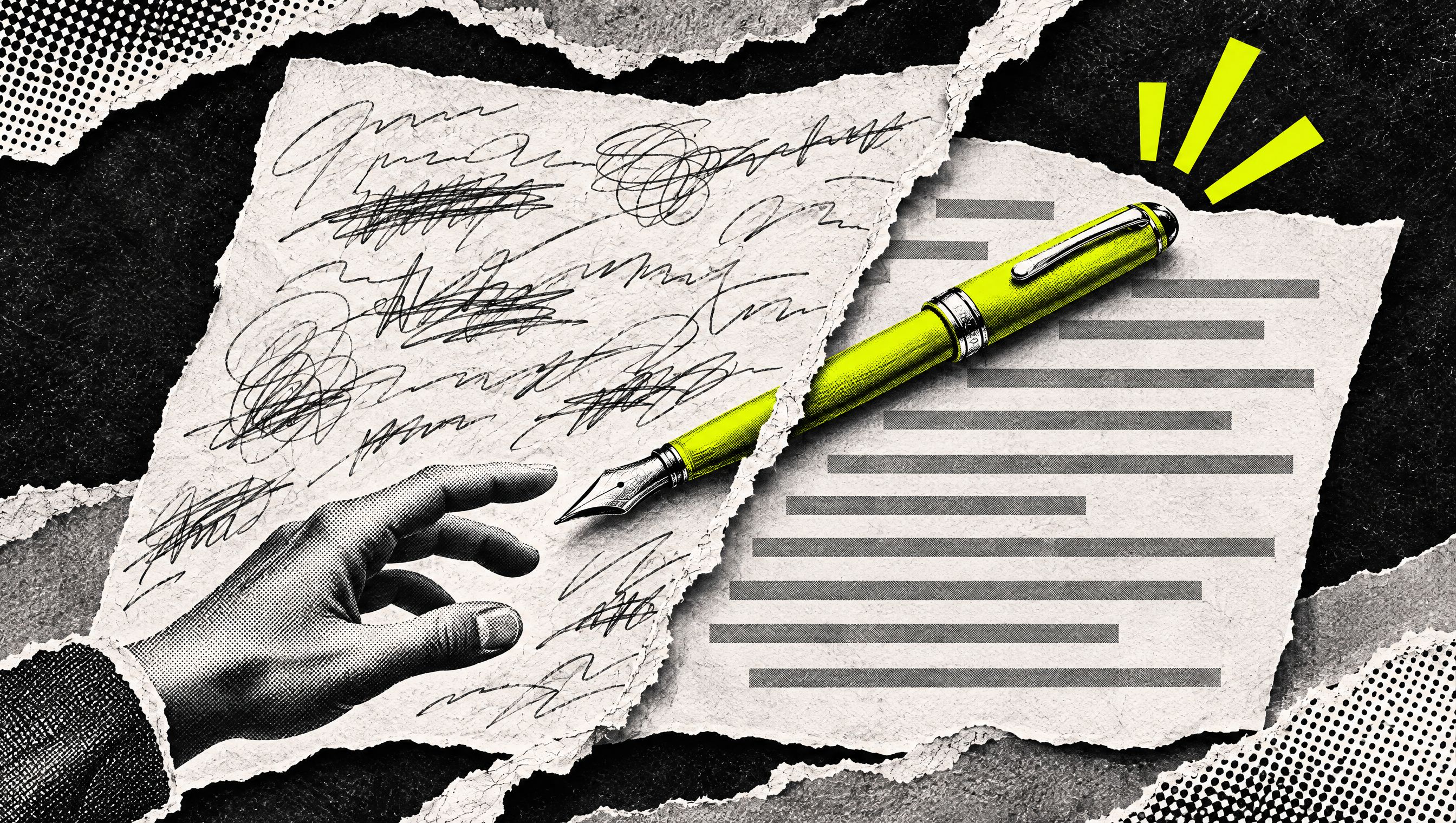
I have a question for you, and depending on how you answer it, you might think a little differently about the article you’re reading right now.
At what point does someone stop being an author?
Think about how writing has evolved. For most of human history, if you wanted to write something, you had to come up with the ideas, figure out how to express them, and physically put the words on paper. Eventually we got computers, and with them came spellcheck. Suddenly a machine could tell you that you’d spelled something wrong and offer to fix it.
Nobody questioned whether you were still the author.
Then came grammar checkers. Now the computer wasn’t just correcting spelling. It was correcting how you constructed sentences. Then tools like Grammarly started suggesting better ways to say things. Not because what you wrote was necessarily wrong, but because the machine thought it could say it better.
Still your writing, right?
Eventually those tools started rewriting entire sentences and paragraphs. They could reorganize your thoughts, improve the flow of an argument, and suggest entirely different ways of communicating an idea.
And now, with generative AI, I can give a machine a topic and ask it to write an entire article.
Somewhere along that progression, people start getting uncomfortable. At some point, they stop considering you the author.
But where exactly is that point?
I think most people would agree that using spellcheck doesn’t disqualify you from being an author. And I suspect most would agree that asking ChatGPT to write an entire article about something you know absolutely nothing about is a different story.
It’s everything in between that gets interesting.
So here’s how I writethis newsletter.So here’s how I writethis newsletter.
I’ve done a lot of writing in my life, long before generative AI came along. And if I’m giving myself a little credit, I think I’ve gotten pretty good at it. I’ve developed my own writing style, my own tone of voice, and a way of communicating ideas that feels distinctly mine.
But here’s something I’ve realized about myself. As much as I enjoy writing, the part I’ve always loved most isn’t actually putting words on a page. It’s coming up with the ideas in the first place.
I love exploring a concept, challenging assumptions, connecting things that might not seem related, and working through an argument until I understand exactly what I believe. What I don’t particularly enjoy is spending hours figuring out how to communicate those thoughts in a way that other people will understand.
I’ve always found that part tedious. And frankly, it’s probably kept me from sharing a lot of ideas over the years.
AI has changed that.
I’ve spent a considerable amount of time teaching my AI model how I write. I’ve given it examples of my work, corrected its tendencies, and pushed it to reproduce my voice to the point where the finished writing is often indistinguishable from something I would have written myself. At least to me.
So now, when I have an idea for this newsletter, I spend time thinking about it. Sometimes I’ll spend days turning it over in my head, challenging my own assumptions, and trying to figure out exactly what I believe.
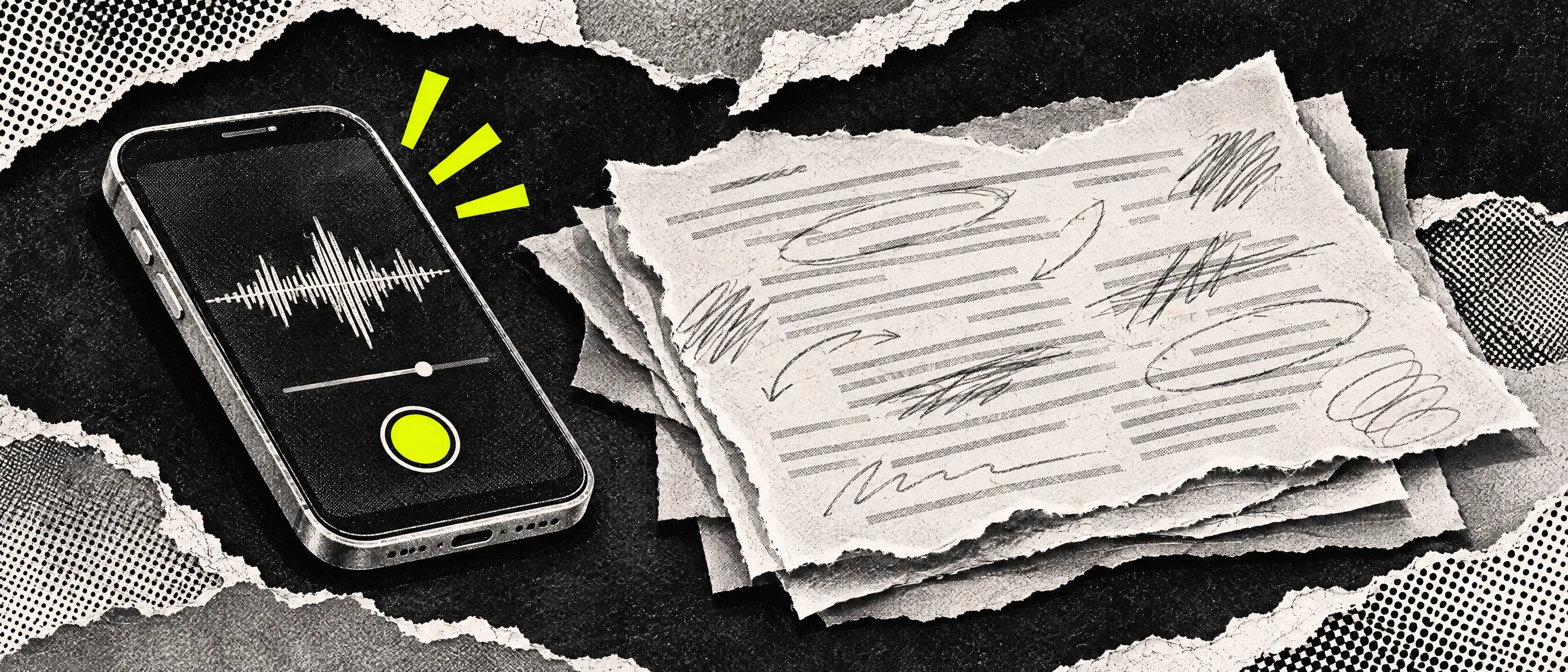
When I’m ready, I usually open a voice note and start talking. I’ll spend fifteen or twenty minutes explaining the idea, providing examples, arguing different perspectives, and generally rambling until I’ve gotten everything out of my head.
Then I ask AI to turn that conversation into an essay.
The ideas are mine. The arguments are mine. The perspective is mine.
What comes back isn’t always great. Sometimes it completely misses my point. Sometimes it sounds nothing like me. I’ll push back, correct things, rewrite sections, and keep working until I’m satisfied that the finished article represents what I was trying to communicate.
But here’s the thing. I didn’t personally write every sentence you’re reading.
The ideas are mine. The arguments are mine. The perspective is mine. Even the writing style is something I’ve spent years developing. But many of the words were assembled by a machine.
So did I write this?
I certainly think I did. But I also recognize that my definition of authorship might be different from yours.
And this isn’t just happening with writing.
I’ve been making music.I’ve beenmaking music.
Anyone who knows me knows that I love karaoke. I’m not particularly good at singing, but I know how to entertain a crowd, and I’ve always loved the experience of performing music. What I’ve never been able to do is actually create it.
I can’t play an instrument particularly well, and I certainly couldn’t walk into a recording studio and produce the kind of music I’ve been making lately.
But I have stories to tell.
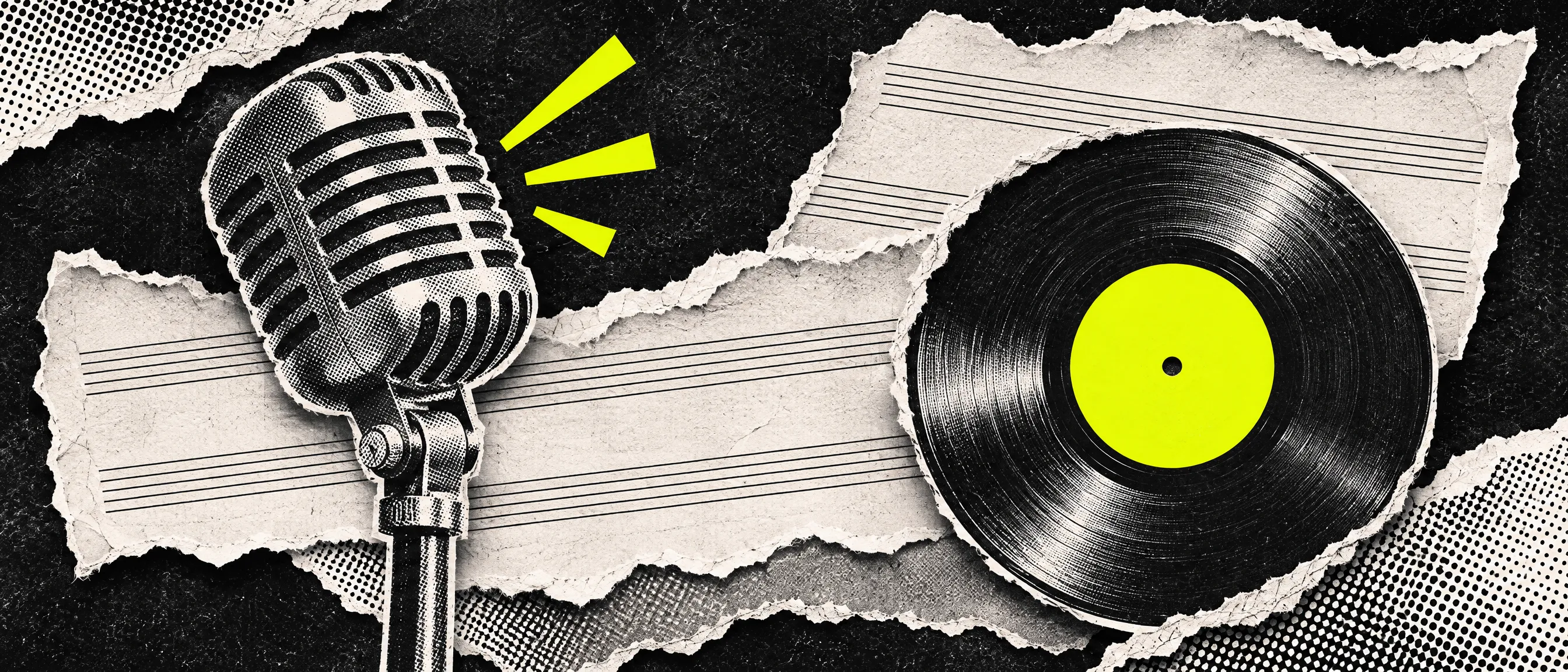
Over the past several months, I’ve been creating songs using AI. I’ve spent hours working through lyrics, describing personal experiences, developing the emotional direction of songs, and thinking about how an entire collection of music should tell a larger story. I use AI to help write the lyrics and Suno to turn those ideas into actual music.
I brought the experiences, the memories, the emotions, and the vision. The AI brought capabilities I don’t possess.
And some of those songs have brought me to tears. Multiple times.
There’s something pretty extraordinary about hearing an experience from your own life expressed through music in a way you never could have accomplished on your own.
I didn’t simply ask a machine to make me a sad song. I brought the experiences, the memories, the emotions, and the vision. The AI brought capabilities I don’t possess.
We created something together.
Now, you could argue that I didn’t actually make that music. I didn’t sing it. I didn’t play the instruments. I didn’t compose every note.
Fair enough.
But without my involvement, those songs wouldn’t exist either. At least not in the form they do today.
And that’s where I think our traditional understanding of creativity starts to fall apart.
We’ve always had collaboration. Authors work with editors. Musicians work with producers. People have been helping other people bring creative ideas into the world forever.
But collaborating with a machine that can independently generate words, melodies, and ideas is something fundamentally different. We’re trying to understand it using definitions that weren’t built for it.
Maybe we’re askingthe wrong question.Maybe we’re askingthe wrong question.
I started this article talking about giving away agency. Every time technology takes over another part of the creative process, it seems like we’re surrendering a little more control.
But I’m not convinced that’s what’s actually happening.
When I create music with AI, I don’t feel like I’m giving up my creativity. I feel like I’m finally able to express creativity that was always there but that I never had the technical ability to bring into the world.
And with writing, something similar is happening, but from a completely different direction. I already know how to write. I’ve spent years developing that skill. I’m simply choosing to let AI handle the part of the process I find tedious so I can spend more of my time doing what I actually love.
But I also don’t think we can measure someone’s creative contribution by counting how many words they personally typed or how many notes they physically played.
In both cases, I’m creating more than I ever did before. Not because I’m thinking less, but because the barriers between having an idea and bringing it into the world are disappearing.
Of course, someone else could type a single sentence into ChatGPT, publish whatever comes back, and claim to be an author. I’m not suggesting that’s equivalent to spending hours developing an original idea.
But I also don’t think we can measure someone’s creative contribution by counting how many words they personally typed or how many notes they physically played.
For the first time, we’re approaching a world where having an idea and having the technical ability to execute it are becoming two very different things.
I think that’s an incredible opportunity. I also think it’s going to make a lot of people uncomfortable.
We’ve spent generations defining artists, writers, musicians, and creators by what they can physically produce. Now we’re developing tools that allow people to create things they never could have created before.
I don’t know exactly where we should draw the line between human authorship and machine-generated work. I’m not even sure there needs to be one universal line.
But I do know that the music I’ve made means something to me. And I know that the thoughts you’ve been reading in this newsletter are mine, regardless of who or what helped me put them into words.
So I’m curious.
If the ideas are mine, but the words aren’t entirely mine, am I still the author?
And if your answer is no, I’d genuinely like to know where along the way I stopped being one.